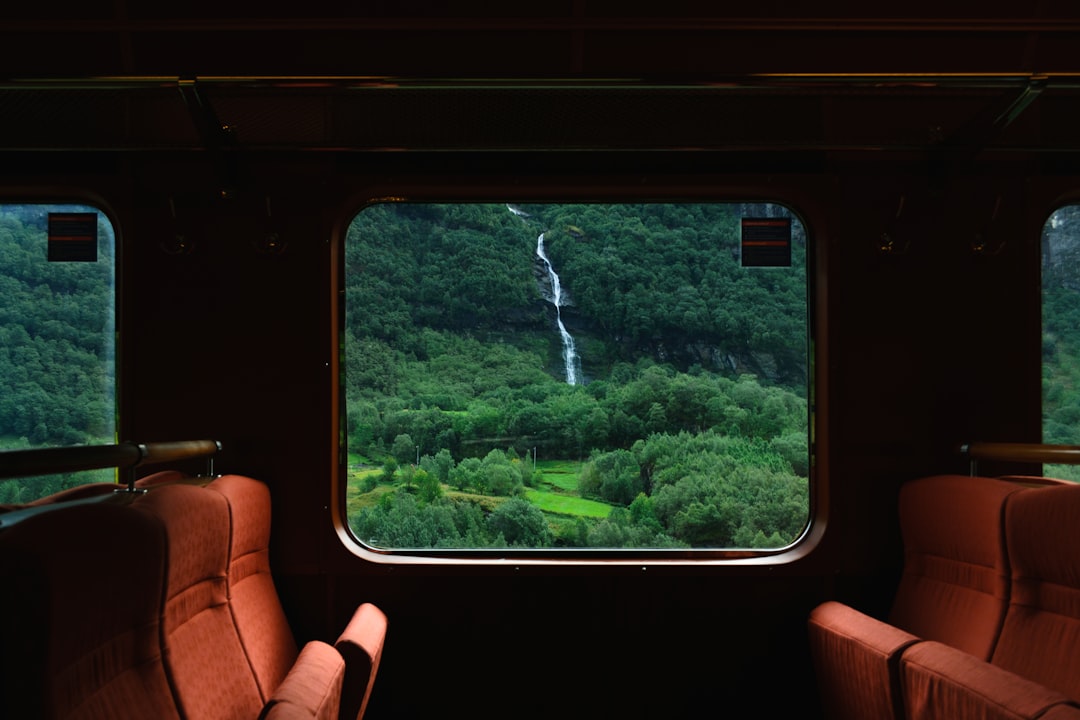


















Southern Sweden's rail triangle — Stockholm, Gothenburg and Malmö — is one of the more operationally straightforward group circuits in the Nordics: three cities, a well-run national rail network, and no requirement for a coach on the intercity legs. That simplicity is real, but it applies differently to a contracted group than to an individual traveller booking their own seat, and the gap between the two is where group programmes built on assumption rather than contracting experience come unstuck.
Group rail seats are not individual rail seats
SJ, the Swedish national operator, releases its discounted long-distance fares on a rolling window ahead of travel, and individual travellers can chase that release date for a good price on a single seat. A group booking of fifteen, twenty-five or forty seats on the same train does not work the same way: it requires either a block booking negotiated directly, or enough individual seats purchased together that availability — not price — becomes the binding constraint. A train that shows availability for one traveller can be fully booked for a group of that size, particularly on busy corridors such as Stockholm–Gothenburg in peak travel periods.
The practical rule: confirm group seat availability on the specific service before confirming the itinerary around it, not after. A rail-based circuit built on the assumption that "trains run every hour, so seats are available" is a circuit that gets re-costed when the group is confirmed and the seats aren't there.
Where a coach still belongs in a "car-free" circuit
Car-free does not mean coach-free. Local movement within each city — airport or station transfers with luggage, access to sites not served directly by the metro or tram network, day excursions from a base city — can be more practical, and sometimes cheaper, for a group on a chartered local coach than coordinating twenty-five people through a public transit system built for individual journeys. The efficient model splits the circuit cleanly: intercity legs by rail, local and excursion movement by coach, with the handoff planned rather than left to whichever option looks convenient on the day.
What each city actually offers a group, beyond the postcard version
Stockholm's archipelago access, Gothenburg's west-coast island trips and Malmö's modern Västra Hamnen district are the sights every itinerary lists. What matters operationally is capacity: archipelago ferries run on fixed sailing schedules and may have group-size limits, Gothenburg's smaller excursion boats can fill up in the June–August window, and Malmö's compact centre means a coach drop-off point needs to be fixed well before arrival rather than improvised on site.
A circuit that reads well on a map — three cities, one rail line — still has three separate sets of local capacity constraints underneath it. None of them show up until the group is sized and dated.
Timing: what actually moves the difficulty, not just the weather
Late May to early July offers the longest daylight, which makes it one of the strongest windows for the experience itself; hotel and transport availability in those weeks is worth checking early. Mid-July, when many Swedish businesses close for the summer holiday period, changes the texture of city itineraries — quieter streets, but some venues and restaurants operating on reduced hours, which needs to be factored into a group dining plan rather than discovered on arrival. Midsummer weekend itself is very quiet, with many shops and restaurants closed, and a group itinerary should route around it rather than through it.
Frequently asked questions
Can a group of 30+ travel this circuit entirely by train?
The intercity legs generally can, provided the seats are secured as a group booking well ahead rather than assumed from individual-fare availability. Local and excursion movement within each city is usually better served by a chartered coach.
Does this circuit work outside the May–August window?
The rail network runs year-round, but archipelago ferries, excursion boats and some seasonal attractions operate on a reduced or closed schedule outside the summer months, which changes what the itinerary can actually include.
What's the biggest planning mistake on this route?
Treating group rail availability as equivalent to individual rail availability. The train running hourly says nothing about whether it can seat a party of thirty together on the date needed.
Why not just charter a coach for the whole circuit instead of using rail at all?
On the longest leg, Stockholm–Gothenburg, high-speed rail is often faster and more comfortable for a group than a coach, and it avoids drive-time constraints; a coach-only circuit is possible, but it changes the pacing of the programme.
How does this differ from the broader Nordic contracting picture?
This is the operational layer for one specific circuit. Our piece on Nordic versus Scandinavian contracting covers the country-by-country supplier and seasonality differences across the wider region.
Planning a Swedish group circuit?
BRACAP has contracted ground product across Europe since 2007. Send us your group size and dates, and we can review what looks confirmable as a group booking on the rail legs and where a local coach makes more sense than public transport. See the destinations we operate across Europe, or send us your programme and request a proposal.