











Why Brussels works as a political science field trip, and why it is hard to run
Brussels is a live case study in multi-level governance, which is why political science and international relations groups keep asking for it. The Brussels-Capital Region comprises 19 municipalities and is an enclave within Flanders, so bilingual French and Flemish signage is a daily reminder of Belgium's federal structure. On top of that, the city hosts the key institutions of the European Union, the headquarters of NATO, and a large community of lobbyists, think tanks and advocacy groups, much of it within one accessible district.
For a university or sixth-form group, that concentration is the value: students can walk from a drafting institution to a lobbying think tank in an afternoon. For the operator, it is also the difficulty. Almost every institution that matters has its own request channel, its own group-size range and its own booking window, and several depend on the availability of rooms and speakers rather than on a ticket. A Brussels programme is built around those access rules, not around a list of sites. The same logic applies to a Berlin programme centred on the Bundestag, and to the way educational travel has moved towards narrow, expert-led formats.
The institutions: group sizes, booking windows and what is free
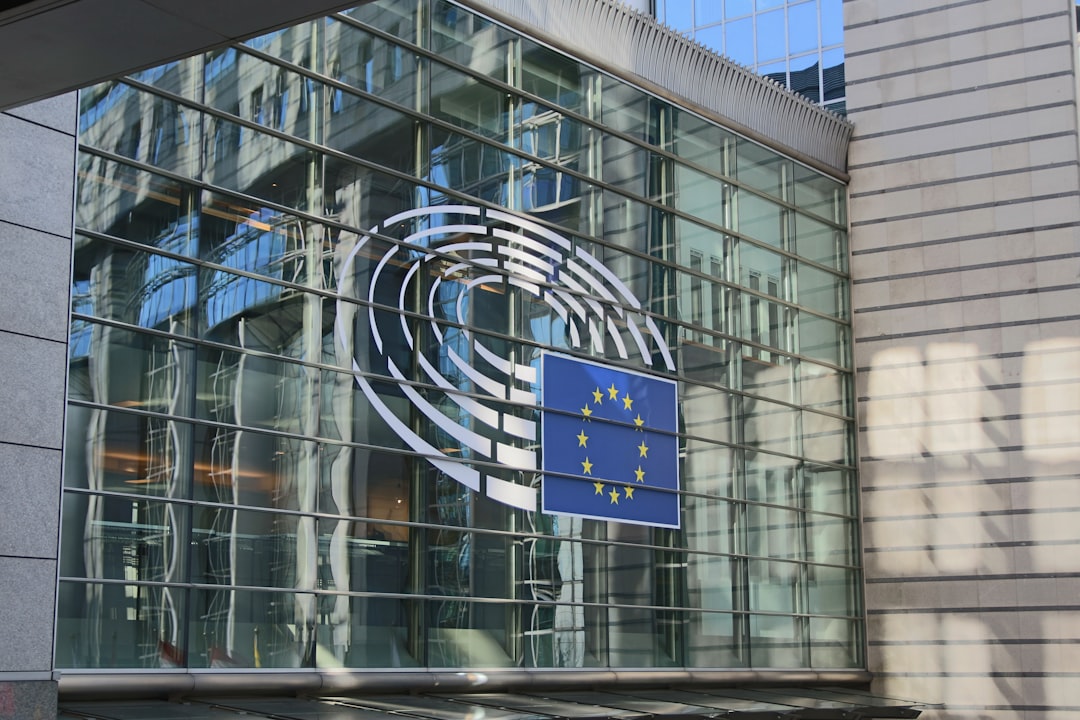
The European Parliament's Hemicycle visits are free and booked through the Visits Service: groups of 20 to 80 people, booked two months in advance, subject to the availability of rooms and speakers. A group above 80 has to be split, and the request is the anchor the rest of the programme is timed around.
Hemicycle closure from January 2027. The Parliament states that the Brussels Hemicycle will close for renovation from January 2027 until further notice, and that it will keep welcoming groups for visits and lectures during the renovation: only access to the Hemicycle itself will be unavailable. Any programme quoted for 2027 or later should therefore be written around the visit and lecture format the Visits Service confirms, not around a Hemicycle seat.
The Commission's visitors' centre takes groups of 15 to 100 people from age 15, with requests accepted no earlier than five months and no later than ten weeks before the visit. Visits are free and the centre is closed throughout August. That five-month-to-ten-week window is narrow enough that it needs to be diarised when the programme is quoted, not when the group confirms.
Two further sites are free and suit a first morning. The Parlamentarium, the Parliament's interactive museum, does not require individual visitors to book, but booking is strongly recommended for groups. The House of European History, in Parc Léopold, is free, and groups of ten or more need to reserve in advance. The Council of the EU and NATO Headquarters have a more limited visitor offer and run their own official request channels: check each one's current visitor information before including either in a quoted programme, and do not treat either as a given.
Beyond the buildings: think tanks, briefings and the EU Quarter
Policy in Brussels extends well beyond the institutional buildings. Think tanks such as Bruegel, CEPS (Centre for European Policy Studies) and the Egmont Institute host public events, from panel discussions to policy briefings, and some require registration. Following their event calendars while the programme is being designed is the most reliable way to find a session that matches the group's dates, and it lets the operator tell the academic lead early which sessions are realistic.
The Commission's daily midday briefing at the Berlaymont is a press briefing for accredited journalists; it is streamed online and can be followed from the classroom or hotel as a way to show how information is released. Student journalists with accreditation may find openings at the Résidence Palace / International Press Centre. The Schuman roundabout is the geographic centre of the EU Quarter and a natural orientation point, and informal spots such as Place du Luxembourg are often where EU-affairs staff gather after work; for younger or supervised groups that is an observation, not a programme item.
These sessions are the part of a Brussels programme that cannot be bought off a shelf, which is the same point made in what educational travel buyers now ask for: the learning objective is written first, and the access is arranged to meet it.
Timing the programme: academic calendars, recess weeks and event dates
The periods of March to May and September to October generally offer institutions in full session, with mild weather. August is largely closed, and the Commission's visitors' centre does not take groups then; the weeks around late July can also be quiet. The Parliament publishes its calendar and committee agendas in advance, and its sitting pattern, including the weeks when it meets in Strasbourg, changes what is on in Brussels, so the calendar should be checked against the group's dates before a request goes in.
Event weeks can compress hotel and coach availability in the city; the dates for the coming season are set out in Belgium's May to July 2027 event calendar. For the wider picture of what gets booked first across components, see the European group booking calendar.
Where to base a group and how to move it
The base follows the agenda. Ixelles, particularly the Matongé area, is walkable to the EU Quarter and close to the Université Libre de Bruxelles (ULB), which suits a university group. Saint-Gilles is a more budget-oriented alternative with good access to Midi station, convenient when the group arrives or leaves by high-speed rail. Staying near the Grand Place is attractive on a map but adds a noticeably longer commute to the EU Quarter, so it makes less sense for a programme built on institutional visits.
Brussels is well connected by high-speed rail from London, Paris and Amsterdam, which makes it easy to combine with a multi-city programme. Within the city, the main circuit between the Schuman area, Louise and the Grand Place is workable on public transport, and a group day pass or transport arrangement should be settled with the accommodation and the guide. For a research-minded cohort, the KBR (Royal Library) is worth considering; check its current access and registration rules before including it. Group meal arrangements, rooming and security-related participant details are better collected once, early, than institution by institution.
Building the itinerary: a four-day structure around the booking anchor
A four-day structure keeps the institutional circuit meaningful without turning it into a checklist:
- Day 1: The Parlamentarium for an interactive introduction to the EU, then the House of European History for context. An orientation walk through the EU Quarter closes the day.
- Day 2: The pre-booked visits: the European Parliament group visit (confirm what it covers if the group travels in 2027 or later) and, if the group qualifies, the Commission's visitors' centre.
- Day 3: External actors. A public event at a think tank such as Bruegel or CEPS and, where an official request has been accepted, a Council of the EU or NATO visit.
- Day 4: Belgian federalism. The Federal Parliament, the Royal Palace quarter and, time permitting, the Flemish and French community institutions, to show the national layer under the European one.
Keep a buffer half-day: committee agendas and public hearings are published in advance and can offer a live session that was not in the original plan. The Parliament asks for group requests two months ahead and availability depends on rooms and speakers, so everything else in the itinerary should be timed around that anchor.
Planning a Brussels programme?
BRACAP has operated ground product across Europe since 2007. If you are quoting a Brussels programme for a politics or IR group, send us the group size, the dates and the learning focus, and we can review with you which institutional requests to start first and how the days fit together. Send us the brief.