















Glasgow's 2026 Commonwealth Games (23 July–2 August, official Games page) are behind us. What a major multi-sport event does to coach capacity, accommodation, supplier checks, ticketing and lead times holds for any DMC now weighing a group programme against the next major multi-sport event, festival or conference on a mid-sized city's existing supplier base. This is an operational lesson drawn from the Glasgow case, not a live planning brief for these particular Games.
Coach capacity tightens before hotel capacity does
Tour operators planning group programmes for a Games window typically start by securing accommodation. That order of work can cost money, because the first constraint to bite is often transport, and it resurfaces every time a major event lands on a mid-sized city's existing coach pool.
A regional coach fleet is finite, and a Games window pulls it in several directions at once: visiting groups, local event logistics, spectator and workforce transport, and the usual summer holiday charters. Operators who leave coach contracting late can face positioning costs well above standard rates, as units are sourced from further afield and the extra dead mileage erodes margin on mid-market budgets. Coaches are also a different risk from hotels: a company may accept work months ahead and then hand the service to a third party if its own fleet is saturated, so booking early reduces the risk but does not remove it.
Driver-hours rules compound the issue. Under Regulation (EC) No 561/2006 the standard limit is nine hours of daily driving, extendable to ten twice a week (see EUR-Lex), and similar limits apply in Great Britain. Long transfer days, such as a full-day excursion that also crosses to Edinburgh, may need a second driver or a split into two days, which reduces the effective coach-days available in peak season. Groups whose coaches were contracted early, through established supplier relationships, are in a stronger position than those still working to a standard lead time once the event calendar has filled.
Accommodation: looking beyond the city centre
Glasgow's city-centre 3–4 star inventory sounds generous until event organisers, broadcasters, teams and officials contract blocks ahead of the public. Realistic group placements often move outward, to places such as Paisley, East Kilbride or Hamilton, which can offer lower room rates and fewer competing group check-ins on event mornings, in exchange for a longer daily coach transfer.
Edinburgh functions as overflow only if operators accept congestion on the M8 corridor during Games week. Transfers into the city centre on event days should be planned with generous margins rather than normal journey times. This is where daily itinerary pacing breaks: venues open on schedule, guides arrive late, groups miss sessions.
Group dining is the secondary constraint. Many city-centre restaurants are set up for smaller parties, so larger groups need dedicated arrangements agreed well in advance. Suburban hotel restaurants can offer better capacity and more predictable pricing. Room configurations for school groups, such as twin rooms, should be confirmed in writing by the hotel, not simply listed on rooming documents, because late-stage changes to room types during a contract are a known risk in tight markets.
Supplier vetting in a high-demand window
High-demand periods can attract new or lightly established suppliers to a market, including coach brokers who advertise competitive rates. Verify every supplier's operator licence and insurance directly with the licensing authority rather than relying on a broker's assurance. A supplier roster built on repeat contracting and checked safeguarding practice is difficult to replace in a single season, which is why established relationships matter most when demand spikes.
Guide accreditation follows the same logic. Scottish Tourist Guides Association Blue Badge holders have completed formal qualification; freelance event guides, however personable, may not have equivalent training or consistent knowledge standards. For school groups, ask what safeguarding checks guides and drivers hold. There is no official expiry date on a DBS certificate (GOV.UK guidance), so agree in advance how recent a check must be, request copies well before arrival, and do not leave it to the day.
Risk assessments should be conducted per venue, not per city. Kelvingrove Museum's group entry procedures differ from Riverside Museum's; neither is equivalent to outdoor Loch Lomond activities or crowded Games-precinct navigation. Site-specific risk assessment and supplier checks reduce the operator's exposure during peak-demand periods, when vetting shortcuts become tempting.
Venue access and the ticketing trap
Major-event tickets are typically sold to individuals, and group allocations, where they exist, are arranged separately through the event's official channels. Operators cannot simply purchase dozens of tickets to the same event and call it a group booking. Tickets for the most popular sessions, such as athletics, swimming or the closing ceremony, tend to be constrained well before the event, and group allocations can close earlier than individual sales.
Non-event experiences absorb spillover demand. Kelvingrove Art Gallery and Museum, Riverside Museum and Loch Lomond day trips remain accessible without event tickets. However, whisky distillery group visits are often limited to restricted group windows and book out far ahead in normal years, and an event year can stretch that further. Edinburgh Castle and similar major monuments also release group entry on their own terms, with a limited number of group slots per day, so confirm access conditions directly with each site.
Sequencing: what the booking calendar looks like
Looking back, operators who handled this well worked backward from arrival with a set of dependent fixed points, and the same sequence applies to any major-event group programme:
- Coach contracting: confirmed early, with deposit terms agreed in writing
- Accommodation rooming lists: locked on the hotel's deadline, with change terms set in the contract
- Restaurant group bookings: confirmed with margin for larger parties, with the menu and dietaries following
- Guide assignment: named guides confirmed ahead of arrival, with substitution terms agreed
- Final manifest, dietaries, mobility requirements and emergency contacts: submitted by each supplier's deadline
Retail booking platforms cannot hold this calendar together across multiple suppliers. European tour operators benefiting from peak-season bookings across other destinations often underestimate how tightly event-week programmes compress timelines. A DMC should manage these dependent booking phases in sequence, so that a delayed rooming list doesn't cascade into a missed coach contract or a guide confirmation gap.
School and senior groups: distinct operational needs
School groups need staff-to-pupil ratios set by the school's and the local authority's policies, single-sex floor allocation where possible, and evening curfew enforcement through hotel security coordination. Safeguarding documentation, such as DBS or PVG certificates, written consent for off-site activities and emergency contact trees, should be verified well before departure. Event-week congestion raises safeguarding risk; groups navigating crowded public transport or venue entry points need additional supervision capacity.
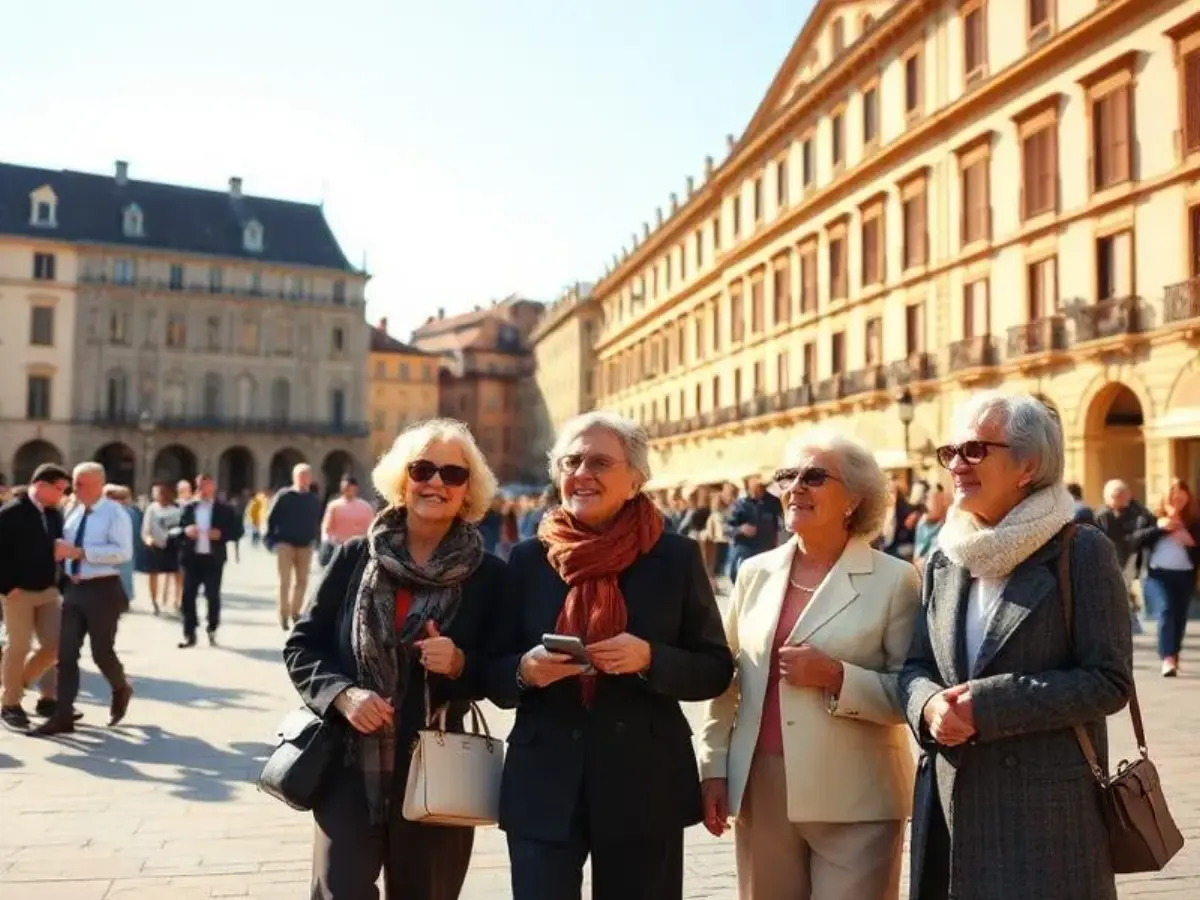
Senior groups demand different logistical precision. Step-free coach access is essential, so confirm wheelchair-lift or low-floor availability when contracting rather than assuming it. Guided sites should confirm hearing loop availability and slower pacing options during peak times. Slower itinerary pacing on congestion days, such as avoiding public transport during venue opening hours, protects the group's experience and reduces fatigue-related health incidents.
Medical cover also needs checking per traveller. EU and EEA visitors may be able to use a European Health Insurance Card (EHIC) for state-provided necessary care in the UK, but it does not replace travel insurance, and other nationalities will need their own cover. Emergency protocols should name a ground contact who can liaise on medical needs during peak event traffic, not just an email address at the operator's head office.
What this means for your next major-event programme
Glasgow won't be the last city where a group programme collides with a major event's demand spike. The pattern above, with coach scarcity outpacing hotel scarcity, a supplier market that fills with unproven names, and a calendar that has to be locked months ahead of arrival, applies whenever your programme overlaps a Games, a festival or a major conference. Our team has operated group programmes across Europe since 2007 and knows which components to secure first when a major event is in the calendar. The operational complexity of major-event group logistics calls for a DMC with proven supplier relationships, not retail platforms or ad-hoc brokers. If you're quoting a programme that lands inside one of these windows, treat coach contracting as the first call, not the last. Send us your brief via our contact page and we can map the calendar with you before you commit to a date.