




















Operators who sell multi-country circuits to senior groups often judge a route by its city list. Yet the friction on these circuits tends to come less from the cities than from the days in between: the early departure, the luggage, the station change, the wait for rooms. On a multi-country circuit those transition days are where the group's energy goes, and they are also the part of the programme an operator can design most deliberately.
Count the transition days, not the countries
Every change of base costs the group a morning of packing and checkout, a transfer and an afternoon of settling in. Adding a country usually adds more than one of these. A route that looks generous on paper can hold almost as many transition days as full days in destination. The practical fix is to cut hotel changes before cutting sights: fewer bases with longer stays, more time in the large cities than in the small ones, and a quieter stop such as Lucerne or Bruges placed where the group will need to recover. The pacing principles behind this, including why single-night stops drive complaints, are covered in what senior travel groups expect from European DMC partners; this piece looks at the days between the stays.
Choose corridors where the transfer is the easy part
Some corridors make a change of country close to effortless. Amsterdam–Brussels–Paris is served by Eurostar high-speed trains (the former Thalys routes), with legs short enough to leave most of the day free. Munich–Salzburg–Vienna runs on ÖBB Railjet services, and Zurich–Lucerne–Lugano crosses the Alps through the Gotthard corridor, a transfer scenic enough to count as part of the programme. Connections that depend on early-morning flights do the opposite: a pre-dawn airport arrival, security queues and baggage handling added to a day that already involves a hotel change. Where the distances suit it, a coach leg gives the operator control over departure time and luggage; how those routes are planned is set out in our guide to scenic European coach routes.
On rail legs, plan for the luggage and the platform
Rail suits senior groups when the details are designed rather than left to the day. On high-speed services such as TGV INOUI in France or Frecciarossa in Italy, first class usually means wider seats and more room, and the question to check for each service is where the luggage goes: lifting cases onto overhead racks is the moment a rail leg turns difficult. Seats allocated near the vestibules shorten the distance with luggage. Many major stations in Switzerland and Austria have step-free platforms; smaller regional stations in Italy often do not, so step-free routing is checked station by station for any connection outside the main hubs. Changing trains at Milano Centrale or Paris Gare du Nord at busy times is best avoided. Some programmes separate the group from its luggage on transfer days, moving cases by road while the group travels by rail; whether that works depends on the route and is agreed per programme. Booking windows differ by operator and country, so each leg is timed against that operator's published calendar.
Place each base to shorten the next transition
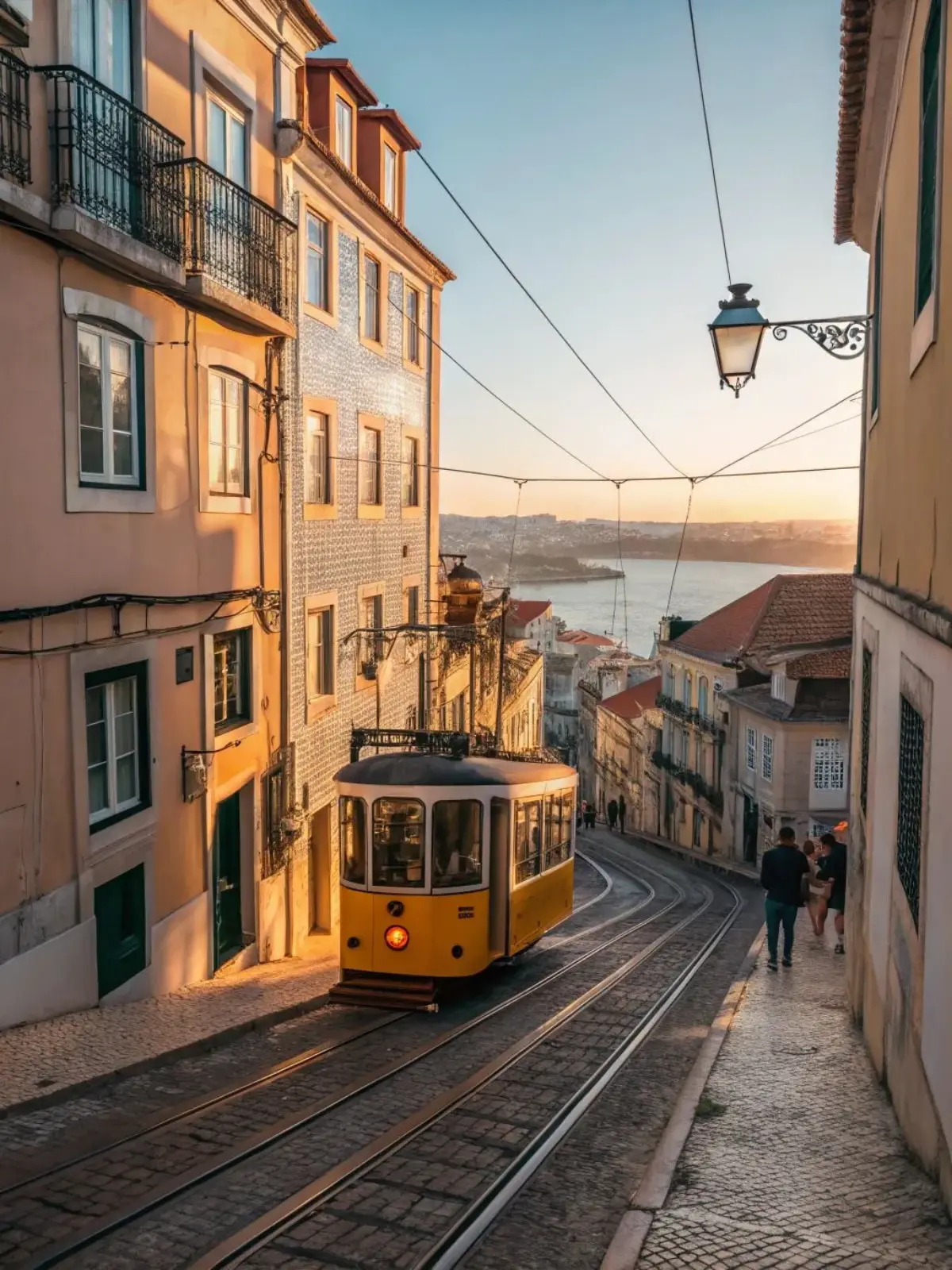
A hotel close to the main station turns arrival and departure into a short walk or a brief transfer. In cities such as Bologna, Ghent or Würzburg, a base near the station keeps the transition day contained. Historic centres with extensive cobblestones, such as Lisbon's Alfama or Dubrovnik's old town, work well for a visit and badly for arriving with luggage. The building-level checks and the walking distances that matter on full days are covered in why location beats stars for senior group hotels.
Time the circuit so transitions happen in mild conditions
Transition days are harder in heat and in crowded stations. Late April to mid-May and mid-September to mid-October generally offer milder weather and calmer hubs, while July and August in Rome, Barcelona or Amsterdam combine both pressures. Substitutions can keep the character of a route while easing it: Parma in place of Florence, Ghent rather than Bruges at the height of day-trip traffic, Porto rather than Lisbon in June. For groups more comfortable with cold than with heat, the Christmas market season from late November through December is an option, with transfers planned around shorter daylight and major events in each city checked before dates are fixed.
When a senior circuit is taking shape, send the draft route, the group profile and the travel window to the BRACAP team. We can review the transfer days with you, from bases and legs to timing, before the city list is fixed.